





What must a property deliver to support e-commerce? Whether a fashion group or a start-up: retail companies are looking for spaces that combine efficiency, scalability, and sustainability. Examples such as s.Oliver and Kindsgut show how diverse the requirements are—and what solutions modern commercial real estate can offer.
Competition in e-commerce is no longer decided solely by products or prices, but by processes. And these are increasingly reaching physical limits: too little space, insufficient scalability, and too much dependence on outdated structures. Real estate is becoming a key lever - not as a static location, but as an active tool at the heart of value creation. But what does that require?
Three key needs top the list for most e-commerce players:
1. Scalable processes – properties that grow with the business
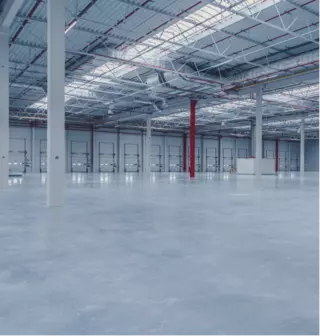
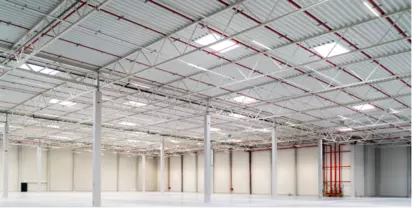
When business grows, space must keep pace. This means properties need modular structures, expandable units, and technological flexibility. Large-scale distribution centers with automated systems offer solutions for high throughput and seasonal peaks. At the same time, mid-sized companies need flexible units that can adapt quickly to new requirements without major disruption.
2. Fast delivery capability – proximity, timing, infrastructure
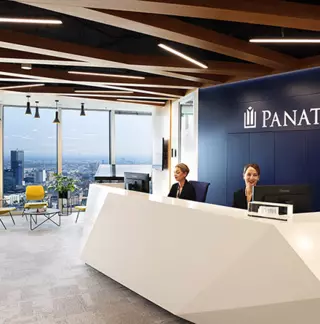
In competition, it’s not just about delivering, but how fast. This requires a high-performance location strategy. Good accessibility, proximity to urban areas, and short distances between warehouse, office, and shipping are crucial - especially in urban environments. This is where real estate solutions that efficiently combine logistics and administration under one roof come into play.
3. Sustainability and future readiness – embedding ESG in space
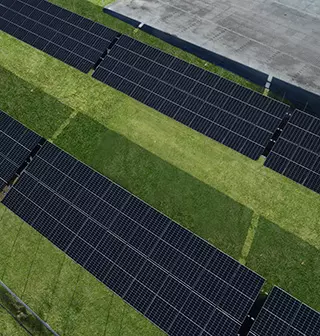
More and more e-commerce companies are aligning their business models with clear ESG criteria. This raises the bar for their real estate: low-carbon construction, photovoltaic systems, recycled materials, green outdoor spaces, and certified standards such as DGNB are no longer optional, but essential. Brownfield developments are also gaining importance, as they enable resource-efficient site selection without additional land consumption.
Real estate development as the answer
Developers are responding to these demands with differentiated concepts - for example, tailor-made properties based on customer needs, modular business parks, or commercial spaces close to city centers. At the same time, the focus is on advisory services, site analysis, long-term third-party usability, and the integration of social and ecological quality. In this way, real estate becomes strategic infrastructure - well thought out, resilient, and scalable.

How these requirements can be implemented in practice is demonstrated by two companies that have redefined their real estate strategies in different ways.
Centralized and sustainable: s.Oliver at Panattoni Park Würzburg Ost
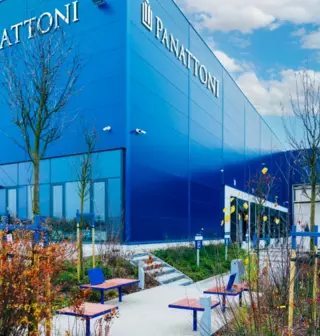
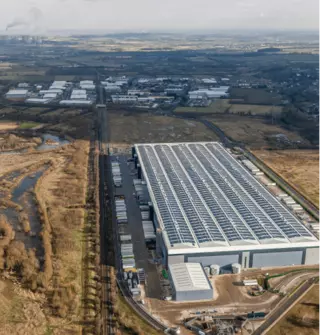
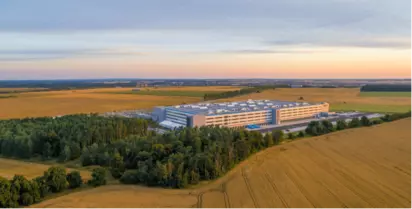
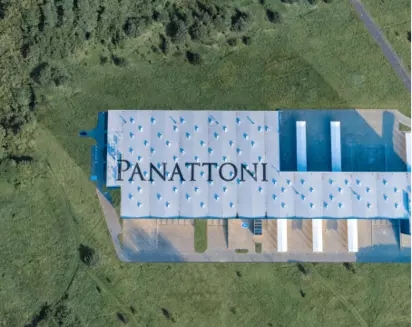
For the s.Oliver Group, building a central distribution center was more than just a logistics upgrade. The goal: to consolidate 16 organically grown warehouse locations in the Würzburg area, simplify processes, and sustainably secure delivery capabilities in e-commerce. In Dettelbach, just 15 kilometers from the headquarters in Rottendorf, a state-of-the-art Logistics Service Center with around 72,000 sqm of warehouse space was developed at Panattoni Park Würzburg Ost. Today, it serves as the backbone for the fashion brand’s Europe-wide shipping operations. Specifically designed intralogistics systems - including a pick tower, a hanging garment warehouse, and a pouch sorter - enable same-day shipping for orders placed by 3 p.m.
The project also sets benchmarks in terms of sustainability. The facility was built within one year on the site of a former asbestos cement plant; 576 tons of hazardous materials were removed and the area was comprehensively revitalized. The property has been awarded DGNB Platinum certification and features, among other things, pre-installation for photovoltaic systems, the use of recycled materials, biodiversity-enhancing outdoor areas, and spacious amenities for employees. Today, e-commerce operations, the NOOS (Never-out-of-stock) program, and the supply of additional brands such as QS, comma, and Liebeskind Berlin are all managed under one roof.

Urban growth: Kindsgut at City Dock® Berlin Spandau
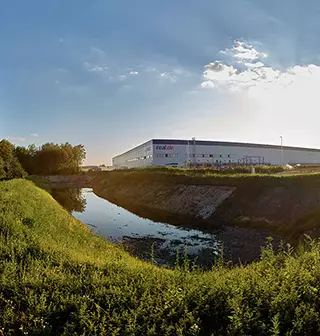
For Kindsgut, a provider of sustainable toys and home accessories for families with children, the real estate question was directly tied to its growth. Separate office and warehouse spaces were slowing down operations, space was becoming scarce, and international expansion - including into the U.S. - was on the horizon. The solution: relocating to City Dock® Berlin Spandau. Across approximately 4,500 sqm, administration and logistics were combined under one roof in a modular concept that enables short distances, lean processes, and maximum efficiency. The flexibly designed spaces were tailored precisely to logistical requirements, with a noticeable impact on shipping speed and process quality.
Another advantage is the direct connection to Berlin’s city center, ensuring fast routes to customers. In terms of sustainability, the new commercial property also aligns with the company’s DNA: DGNB Gold-certified, with photovoltaic pre-installation and modern energy-efficiency solutions. The site thus brings together everything Kindsgut needs: functionality, flexibility, and a strong sense of responsibility. The new space not only improves logistics but also creates the conditions for the company’s next phase of growth.

Conclusion
The examples of s.Oliver and Kindsgut show how different the requirements in e-commerce can be - and how important it is to integrate them into real estate strategy. While one relies on highly automated large-scale structures with high shipping frequency, the other uses urban spatial flexibility as a foundation for further growth. In both cases, it becomes clear that commercial and logistics properties play an active role as infrastructure for scalable processes, fast delivery capability, and the implementation of company-specific sustainability goals.
Read more: