



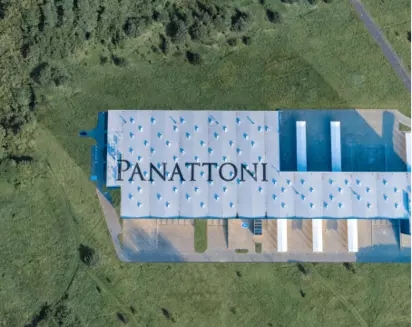

Geopolitical upheavals, sustainable location requirements and the pursuit of resilience are reshaping Europe's logistics real estate market. Emerging logistics regions such as the Hanseatic Belt, Central Germany and Eastern Europe are becoming increasingly important in this context. We are investing specifically in these future-oriented areas.
The events of recent years have shown how vulnerable global supply chains are. Trade conflicts, geopolitical tensions and regulatory changes are forcing companies to rethink their strategies. Goods flows are being redirected, dependencies reduced and delivery times shortened – with Europe becoming increasingly important. ‘We are seeing manufacturing industries moving closer to their sales markets again due to existing uncertainties,’ says Fred-Markus Bohne, Managing Partner DACH & Nordics. ‘This is also increasing demand for modern logistics and production space in Europe.’ Economic and political conditions are becoming increasingly important: discussions about tariffs and trade agreements are influencing investment, while Germany's expansionary fiscal policy is providing economic stimulus. In this context, companies are increasingly seeking stability and regional resilience.
New markets require new standards
When deciding on a location, it is not only size and location that are decisive today, but also the strategic context within the European supply network. ‘We are seeing growing interest in regions with stable political conditions, multimodal infrastructure and sufficient availability of space and labour,’ explains Managing Director Fabio Kirchgeßner.
The fact that traditional logistics centres are becoming increasingly crowded is creating space for new economic corridors in which project developers can identify specific potential – for example, along the Hanseatic Belt or in central Germany. Major projects such as the Fehmarn Belt connection between Germany and Denmark are further driving this development. It strengthens Scandinavia's connection to the Central European internal market and the attractiveness of northern Germany for logistics-intensive companies.

Resilience as a new location factor
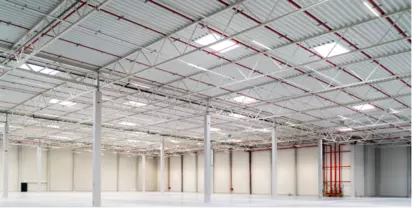
In view of volatile markets, resilience is now a key criterion in location decisions. Production and storage capacities are being relocated back to Europe in some cases in order to increase security of supply and reduce dependencies – keyword: nearshoring. Classic A locations with good motorway connections remain in demand, but well-connected peripheral regions are also gaining in importance. ‘User needs have changed. In addition to location, third-party usability, energy efficiency and rapid implementability are also important,’ says Fred-Markus Bohne.

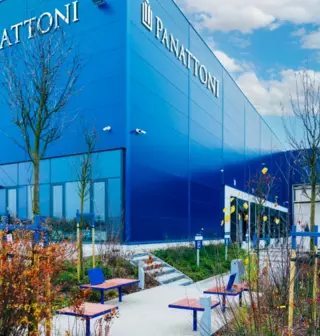
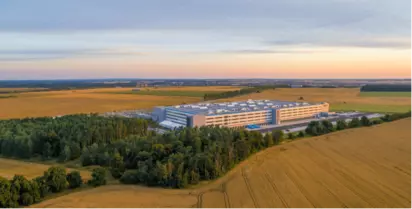
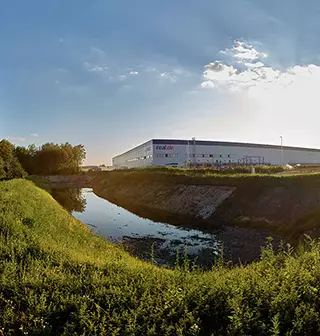
We respond with a clear focus on the creation of sustainable spaces. In central Germany – one of the most dynamic logistics regions – the company has developed Panattoni Park Halle (Saale) Nord on the A14 motorway, Panattoni Park Magdeburg West II at the A2/A14 motorway junction and Panattoni Park Leipzig Airport. All of these projects score highly with their sustainable infrastructure, available space and strategic location. ‘Resilient locations arise where infrastructure, market potential and ESG capability come together,’ emphasises Fabio Kirchgeßner. The ability to respond flexibly to new requirements while ensuring long-term use is crucial today
Sustainability as standard – not optional
What used to be considered an added bonus is now a prerequisite: sustainability has become an integral part of project development. For Panattoni, this means consistently integrating ecological, social and economic requirements – regardless of location. Short distances and good accessibility to domestic markets are essential for companies, not only for reasons of efficiency, but also for CO₂ reduction.

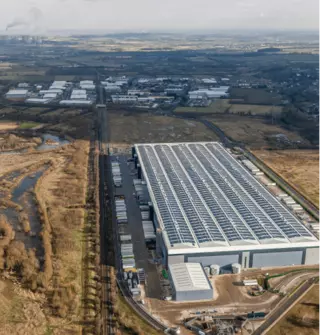
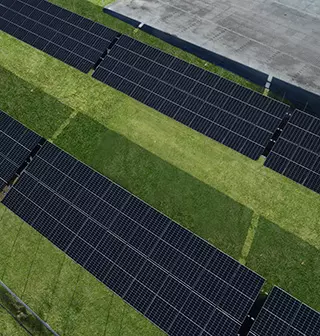
‘Sustainability is no longer an optional issue. It is firmly embedded in our project approach,’ says Fred-Markus Bohne. Around 3.5 million square metres of the developed area is brownfield sites: this saves resources, reduces soil sealing and allows modern usage concepts in established infrastructures. Panattoni also relies on sustainable solutions for energy supply. The installation of photovoltaic systems, along with potential use of self-generated electricity, and the expansion of further charging infrastructure are now standard features in new buildings, among other things. Further measures are planned as appropriate depending on the location, always with an eye on user needs and regulatory requirements. The aim is to create sustainable real estate solutions that are economically viable and future-proof.
Outlook
‘We expect logistics hubs in Europe to become even more diverse in the coming years,’ says Fred-Markus Bohne. ‘Short distances, sustainable solutions and stable conditions will be the key location advantages.’ For developers, investors and local authorities, this means acting today instead of reacting tomorrow, thus setting the course for resilient, economically strong and sustainable logistics structures in Europe.