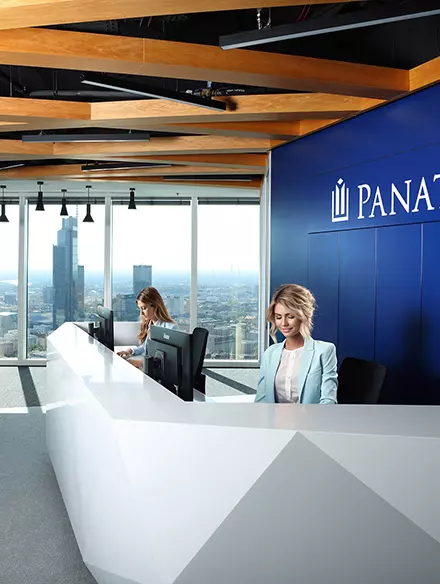

As a leader in industrial real estate, Panattoni is not only about logistics centres and production facilities. It also delivers innovations for segments such as e-commerce, data centres, and modern research and development (R&D) spaces. These are delivered by Panattoni BTS – a group company whose every project is precisely tailored to the individual requirements of the client.

WELL – a global standard of workplace environment
WELL is a certification system focused on the health and comfort of office space users. It is based on scientific, medical, and environmental research, as well as on design, construction, and building management practices. The latest version, WELL v2, verifies the quality of the work environment in 10 key areas, and the certification process itself requires an independent assessment by an accredited WELL Assessor.
The WELL standard is developing dynamically – today it is already applied in nearly 100,000 locations across 137 countries, covering over 557 million sq m of space. Moreover, WELL supports the implementation of the United Nations Sustainable Development Goals (SDGs) – including in the areas of health and wellbeing (Goal 3), equality (Goal 5), and climate action (Goal 13).
The Gliwice office in practice – WELL v2 Gold
The Gliwice R&D project, prepared for a global company from the automotive sector, demonstrates how a tailor-made industrial facility can become an environment for innovation and comfortable work.
The office was designed to support employee health and wellbeing – the WELL v2 Gold certification covered key aspects of the work environment, including air and water quality, lighting, acoustics, as well as policies supporting mental health and social engagement. The project was created in cooperation between Panattoni BTS, a global automotive client, and WSP Polska experts. The result is a modern, sustainable workplace that sets a benchmark for the entire industry.
The certification covered an office space of 3,600 sq m, including open space, conference rooms, social areas, and communication zones. The process of obtaining certification involved detailed analyses of project documentation, rigorous tests of the indoor environmental quality, and an on-site inspection carried out by an independent WELL certification body.

WELL v2 Gold in practice – 10 key areas
WELL v2 certification is based on 10 categories, which were assessed in the Panattoni R&D project in Gliwice in terms of innovative solutions improving the work environment. Implemented solutions included, among others:
Air
- Dedicated ventilation systems delivering 30% more fresh air than required by standards.
- Building materials (paints, adhesives, flooring, panels) and furniture compliant with strict VOC emission standards, with low-emission certification.
- Air purification system with F7 and F9 class filters, removing PM2.5 and PM10 particles.
- Pollution protection procedures also implemented during the construction stage.
Water
- Water quality audit covering inorganic, organic, and agricultural contaminants.
- Provision of drinking water meeting microbiological safety and taste requirements.
- Bathrooms and toilets equipped with touchless dispensers, leak monitoring systems, and ventilation preventing moisture and mould.

Nourishment
- Comfortable dining areas with access to refrigerators, sinks, and kitchen appliances.
- A varied selection of healthy products, including alternatives for people with food allergies.
Light
- Spaces optimised for maximum access to natural daylight.
- Windows with sunshades (blinds) minimising glare.
- LED lighting systems with a high colour rendering index (CRI >90), supporting circadian rhythm.
Movement
- Workstations with height-adjustable desks and ergonomic chairs.
- Signage encouraging physical activity (e.g. use of stairs).
- Lockers, showers, and secure bicycle boxes supporting active commuting.
Thermal Comfort
- HVAC system enabling stable thermal conditions throughout the office.
- Company sweatshirts as an element increasing individual thermal comfort.
- Flexible dress code supporting adjustment of clothing to temperature preferences.

Sound
- Division of the office into zones for concentration, collaboration, socialisation, and communication, to limit noise transfer.
- Reverberation and noise level tests – both internal and external – plus acoustic panels and ceiling sound absorbers.
Materials
- Building and finishing materials meeting WELL and BREEAM certification requirements.
- Low-emission carpets, paints, and insulation free from hazardous substances.
- Materials with EPD environmental declarations or Greenguard certificates.
Mind
- Biophilic design – greenery visible from most workstations and plants in common spaces.
- Building surroundings with a flower meadow, trees, and recycled elements (e.g. a swing made from a wind turbine blade).
- Policies supporting mental health, such as stress management plans and promoting work-life balance.
Community
- Surveys conducted among office users regarding their needs and expectations.
- Availability of space, educational activities, and joint planning of the work environment (stakeholder charrette).
- Facilities for new parents and preventive health programmes.

Cooperation and client involvement
The success of the project would not have been possible without the tenant’s active involvement at every stage of implementation. From the outset, the goal was to create a work environment that supports innovation, health, and wellbeing of their teams.
The client was involved in, among others:
- defining WELL goals and user expectations,
- cooperating in the selection of design and material solutions,
- implementing internal health-friendly policies (e.g. flexible dress code, promotion of physical activity),
- co-creating communication and education plans for employees,
- participation in measurements, surveys, and user analyses of the office.
Thanks to this partnership, the tenant actively contributed to the creation of an office in line with WELL certification.
Results and significance of the project
The implementation of a WELL v2 Gold certified office space has delivered a range of measurable and non-measurable benefits. Most importantly, an office designed with employee health and comfort in mind enhances wellbeing, engagement, and work efficiency.
From the client’s perspective, this project strengthens the company’s position as an attractive employer investing in a work environment that meets the highest global standards. It also serves as a tool for building a competitive advantage in the race for engineering talent.