
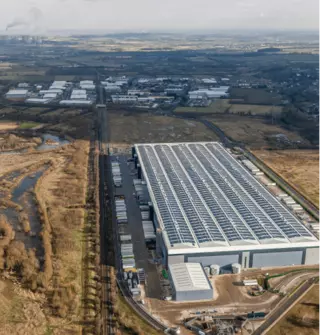
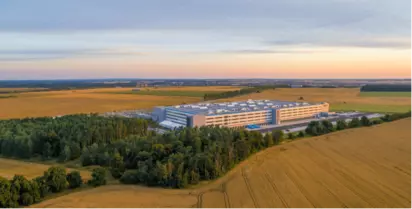

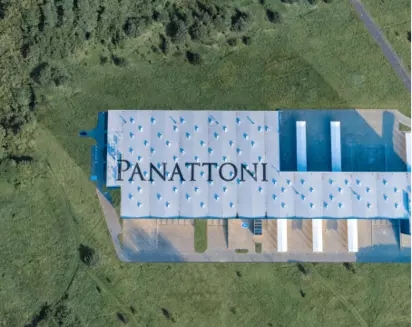
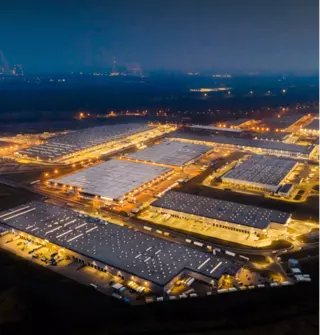
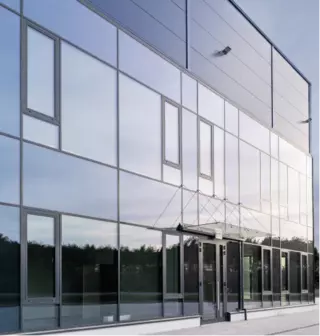
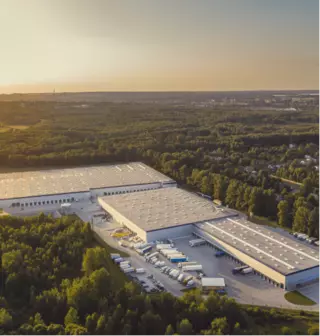

Global technology company ZF has taken over a completed building at the industrial zone Panattoni Ostrov North. The investment relates to the construction of a 57,400 square metre building, which was designed from the beginning according to sustainable principles. The developer of the project on one of the largest brownfield sites in the Czech Republic is Panattoni.
ZF is a global technology company supplying advanced mobility products and systems for passenger cars, commercial vehicles and industrial technology. ZF operates 162 manufacturing plants in 31 countries and employs approximately 168,700 people worldwide, including 3,500 in the Czech Republic. In the Czech Republic, ZF already operates development centres in Jablonec nad Nisou, Plzeň and Zlín and production plants in Frýdlant, Jablonec nad Nisou, Klášterec nad Ohří, Staňkov, Stará Boleslav and Žatec.
In Ostrov, it built a highly automated distribution centre for the aftermarket. From the beginning of the construction project, ZF aftermarket’s division pursued sustainability as a key principle. For example, recycled or eco-friendly materials were being used during construction, waste is effectively managed, and single-use plastics minimized. Additionally, green energy is utilized to power the building, while energy consumption is optimised through efficient technologies, smart building management and effective heating/cooling. But the sustainability concept also extends beyond the boundaries of Ostrov: The location was chosen in particular to be close to the Central and Eastern European markets, thus reducing transport distances and associated emissions.
„We are delighted to celebrate the completion of our new automated distribution centre in Ostrov, which stands as a testament to ZF’s commitment to pioneering mobility solutions and sustainable operations. Our close collaboration with Panattoni was instrumental in transforming this brownfield into a state-of-the-art logistics hub. Together, we have created a facility that will enhance our logistical capabilities across Europe, to provide our customers as quickly as possible with automotive parts," says Klaus Heidrich, Managing Director ZF Aftermarket Ostrov s.r.o.
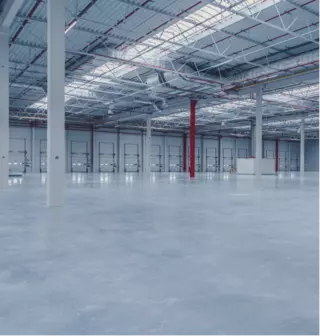
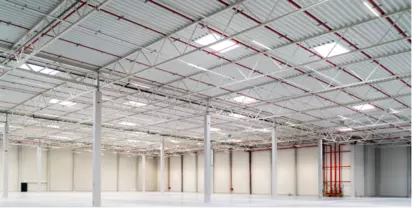
Thanks to the modernisation and optimisation of logistics processes, the first phase of the 57,400 sqm building has 18 loading bays, which is a quarter less than originally planned. This modification also eliminates the need for a loading yard along one side of the building, creating an additional 5,400 square metres of green space on the site. The heating, cooling and ventilation of the hall is designed as a combination of heat pumps with ROOFTOP units (air/air variant with R32 refrigerant) and direct heating with radiant electric panels. The office areas of the office building are heated and cooled by multi-split units supplemented by electric direct-fired heaters and heating mats. As a result, the new lobby, which is not connected to fossil fuel energy sources, aspires to achieve one of the highest levels of the stringent international BREEAM New Construction sustainability certification.
"We are excited to be directly involved in the creation of an ultra-modern and technologically advanced hub that is already becoming part of a sophisticated industrial complex in Ostrov. The Shared Services Centre that is part of the project, has the potential to positively impact on the education system in the Karlovy Vary region. The new facility will certainly be beneficial for the development of the entire area. At the same time, it is a great example of effective use of the original brownfield site, where we have used almost all the construction waste from demolition sites for further construction during the revitalisation process," says Klára Sobotková, Regional Development Director, Panattoni.
Transformation of the site of the defunct trolleybus factory
The industrial park was created on the site of one of the largest brownfields in the Czech Republic, where the trolleybus factory complex used to stand. This plant was built at the end of the 1950s and from 1960 onwards, up to 350 trolleybuses were built here every year. The gradual transfer of production to Plzeň led to the closure of the plant in Ostrov in 2004, after which the site began to deteriorate.
"In the 1950s and 1960s, many companies originally linked to the uranium industry operated in Ostrov. But over time, companies mainly in the light industry, which also employed entire families of the inhabitants of Ostrov, were active here. On behalf of the town of Ostrov, I am therefore pleased that another modern industrial hall has been put into use on the site of the former trolleybus production plant. This will create another opportunity for people in Ostrov to work in modern premises with modern technology. The development of the industrial zone in Ostrov is of great importance not only for the town itself, but also for the Karlovy Vary Region, which is one of the structurally disadvantaged regions of the Czech Republic," adds Pavel Čekan, Mayor of Ostrov.
During the remediation of the brownfield, 12,700 tonnes of hazardous waste were sorted for environmental disposal on site according to the type of contamination, thus preventing the contamination of groundwater with hazardous materials. Overall, the demolition of the former site was able to recycle 98.7% of the original construction and demolition waste. This resulted in 103,000 tonnes of recyclate being used during construction, replacing primary natural materials. This saved the off-site travel of approximately 10,300 trucks. The impact on the environment and the immediate surroundings has been significantly reduced.

news