




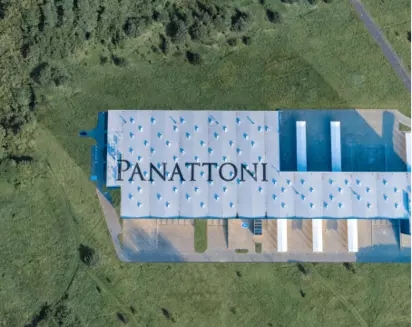

Panattoni, Europe's largest industrial real estate investor, entered the Hungarian market only three years ago but has already built a significant portfolio. The company views its investments not merely as developments but as investment products, structuring its model to allow participation from a wide range of stakeholders, from institutional investors to municipal asset managers. Besides the Budapest metropolitan area, cities like Kecskemét, Debrecen, Szeged, and Pécs are also attractive locations, with railway connections playing a key role in site selection. While meeting ESG requirements and reducing the carbon footprint remain the biggest challenges for the logistics sector, the rapid expansion of Temu could radically transform European e-commerce and the logistics serving it within a few years. Portfolio interviewed László Kemenes, Managing Director of Panattoni Hungary, about the company's real estate investments, the expected returns for investors, and the potential challenges posed by Chinese online retailers.
Panattoni entered the Hungarian market last among the Visegrád Four, despite the fact that logistics is a key sector in Hungary, with a favorable geographical location and a high-quality (road) infrastructure. What business considerations led to this market entry? What plans did the company have for Hungary, and how have the results so far lived up to expectations?
László Kemenes: Panattoni was founded in the USA in 1986, and its first European expansion took place in Poland in 2005. Since then, we have been present in 18 countries across the continent. This is somewhat unique because American companies typically start expanding in Western Europe before moving eastward. However, we recognized early on that the market for logistics services would experience the most significant growth in Central and Eastern European countries.
From the early 2000s, logistics properties in many European countries, including Hungary, were built under a model where the developer remained the long-term owner and operator. However, this is not Panattoni’s main profile—though not unheard of—but rather, we primarily view our investments as investment products or packages, meaning we develop projects that attract relevant investor interest.
The office market has been operating under this model for much longer, but industrial real estate investors have traditionally been more conservative. In Poland, however, the market has always been very liquid, providing a much more favorable environment for the business model we prefer.
I believe the real turning point was the COVID-19 pandemic. Previously, real estate funds and institutional investors were primarily focused on offices. However, the pandemic significantly increased the value of industrial properties, mainly due to the sudden boom in e-commerce. The need to diversify real estate portfolios has remained, but many have shifted from offices to industrial properties. This created an optimal time for us to enter the Hungarian market, and I believe our expectations have been confirmed by the results of the past few years, despite having to revise our plans multiple times due to the energy crisis and the Russia-Ukraine war.
The Hungarian construction and real estate sectors are not in their best shape, but the industrial-logistics segment is performing better than the residential or office markets. How does this affect the company?
The construction industry is indeed struggling, due to various factors ranging from the decline in public investments to the slowdown in residential developments. For us, however, this has a positive effect: there is much more available capacity, competition among contractors is stronger, and construction costs are more competitive. Our tenants benefit from this as well since it impacts rental prices.
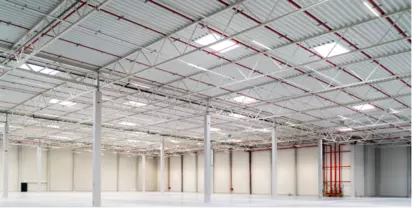
Today, modern logistics properties can be built within 9-12 months once all necessary permits are in place. This timeframe gives us great flexibility, allowing us to quickly start or pause new or ongoing projects based on market demand.
Flexibility is one of our organization’s key strengths, enabling us to adapt quickly to market changes.
We work in multiple models: we develop build-to-suit (BTS) projects where the tenant is known before construction starts, allowing us to tailor the property to their needs. We also engage in speculative developments, where the key factors include location, the expected development of the area, and technical specifications. Additionally, we construct properties under the build-to-own (BTO) model, where the end user becomes the owner of the completed development.
According to previous reports, a logistics center in Gyál was scheduled to begin construction in Q4 this year. What projects are currently underway, and what development areas are of interest to the company and why?
The Gyál project is fully prepared; we have completed earthworks and archaeological excavations. However, I would refer back to the issue of flexibility. The industry is currently experiencing a surge in developments, leading to an oversupply, which is less favorable for investors as it can drive down rental prices and investment returns. This can result in losses, which we aim to avoid.
We believe it is responsible to begin construction only when demand strengthens.
As I mentioned, the 9-12 month construction timeframe provides us with great flexibility for a project that has already been prepared.
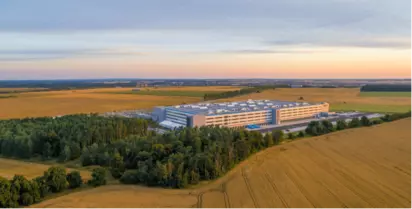
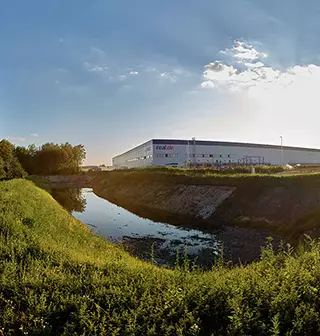
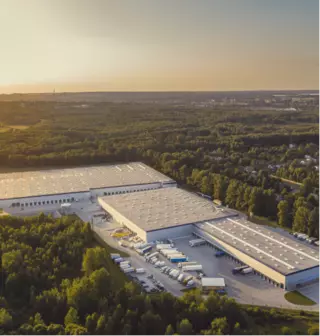
We are continuously exploring new development areas across the country, and regional locations are particularly attractive to us. Our first Hungarian project was delivered in Törökbálint, within the Budapest metropolitan area, last year. In Kecskemét, we recently handed over a logistics and manufacturing facility developed for ZF, one of the largest German automotive suppliers. A similar BTS project will soon be completed in Debrecen, closely tied to the Mercedes factory in Kecskemét and the BMW plant in Debrecen.
From an investment perspective, there are few better logistics opportunities than these, considering location, tenant mix, and relatively low-risk returns.
These are investments that benefit all stakeholders.
From an economic and social perspective, it is highly beneficial that large regional cities and areas can strengthen further. Major new investments attract additional investors, and there is room for greenfield developments. This is why we are continuously evaluating various regional locations, including Csongrád-Csanád and Baranya counties, as well as Northwest Hungary. We see that our investors are also open to new locations. (Portfolio.hu, 2024)
Portfolio.hu. (2024, november 20.). Finanszírozási fordulópont előtt a hazai logisztikai befektetések piaca. Portfolio. https://www.portfolio.hu/ingatlan/20241120/finanszirozasi-fordulopont-elott-a-hazai-logisztikai-befektetesek-piaca-724070